
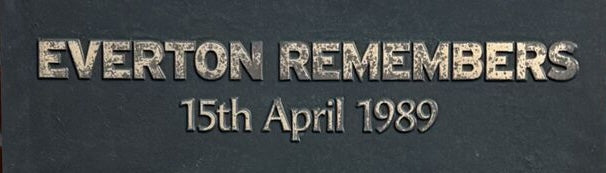
The Seat in the Kop
The Seat in the Kop

One brother wore blue. One brother wore red. Football could never come between them.
A City of Two Colours
In Liverpool, the question comes early. Before school. Before work. Before almost anything else. Red or blue.
It is a city where two great clubs stand barely a mile apart, separated by the trees of Stanley Park. Families split down the middle. Fathers and sons, brothers and sisters, sitting at the same Sunday table and wanting different results on the same Saturday afternoon.
Stephen Kelly chose blue. He is an Evertonian.
His big brother, Michael, chose red.
It did not matter. As Stephen told the Hillsborough inquests in 2014, their brotherly love ended only on Saturdays. For the rest of the week, they were simply brothers.
Our Mike
Michael David Kelly was the quiet one. Bookish. A man who loved his football without needing to shout about it.
He joined the navy at nineteen, and the two brothers wrote letters to each other across the oceans. Michael always promised Stephen a parrot from Africa. It never arrived, and decades later the memory of that promise still drew laughter in a courtroom.
At home, their mother scanned the Liverpool Echo for the shipping news and never fully relaxed until her son walked back through the door. He would come home with his laundry under one arm and a packet of cigarettes for her in his pocket.
After the navy, work was hard to find. It was the 1980s, and Liverpool was a city that had been left behind. Michael went wherever the work was, from one town to the next, and whatever he earned, a share of it found its way back to his mother. He was a father of one.
His brother summed him up with a smile. Two things mattered to Mike: a ticket for Saturday, and his mother's welfare. Stephen was not entirely sure which came first.
The brothers did share one footballing love that crossed the divide. Both adored George Best, and they would travel to Old Trafford simply to watch him play. A red and a blue, side by side in Manchester, united by genius.

Sheffield, 15 April 1989
On a bright spring afternoon, Liverpool travelled to Hillsborough to play Nottingham Forest in the FA Cup semi-final.
Michael Kelly was there, of course. He had his ticket. He stood in pen three on the Leppings Lane terrace, towards the back at first. Within minutes of kick off, the press of bodies behind him had carried him down, almost to the front fence.
Ninety seven Liverpool supporters lost their lives because of what happened on that terrace. Michael was one of them. He was thirty eight years old.
That night, back in Liverpool, Stephen was working as a taxi driver, picking up shaken fans and helping them get home. He did not yet know. Michael was an experienced football man, and everyone assumed he had found his own way out.
He had not. Stephen went to Sheffield and identified his brother himself. The authorities gave Michael a number, 72. Of all the families that day, his were the last to bring their loved one home.
The Long Fight
What followed was a second injustice. The authorities blamed the supporters. A first inquest in 1991 returned verdicts of accidental death, and for a quarter of a century, the families carried that weight.
Stephen Kelly did not accept it. Nor did the families of the other ninety six. For twenty seven years they campaigned, wrote, marched and refused to be quiet.
In 2014, new inquests finally opened. Stephen stood up in court and spoke about his brother, not as a number, but as a man.
"I'm here today to reclaim my brother," he said. "Mike was not just one of the 96, he was not just body 72, he was our Mike. Much loved and much missed."
In April 2016, the jury reached its conclusion. The ninety six had been unlawfully killed. The supporters were not to blame.
"When we got the verdict," Stephen later said, "his name was clear."
Blue on the Kop

The story that has travelled across football in recent years is the simplest part of all.
When Everton play at Anfield, it is said, Stephen Kelly takes his place on the Kop. The most famous end in English football. The home end. The red end.
And he wears blue.
He sits among the Liverpool faithful in his Everton scarf and his Everton hat, in the seat that was his brother's. He does not hide his colours. He does not need to.
Nobody turns on him. Nobody tells him he is in the wrong place. The Kop knows who he is, and the Kop knows why he is there. On derby day, the fiercest rivalry in English football falls silent around one man in blue.
In a game so often defined by hostility, it is a quiet act of grace.

The Derby That Is Different
Liverpool understands this better than any city in football. In the days after Hillsborough, Evertonians and Liverpudlians linked their scarves together across Stanley Park, a chain of red and blue joining Anfield to Goodison. Five weeks later, the two clubs met in the FA Cup final at Wembley, and both sets of supporters stood together in grief and in song.
The Merseyside derby is called the friendly derby for a reason. Not because it lacks passion. It has plenty. But because, in this city, the families are mixed, the streets are shared, and so many have lost someone.
Stephen Kelly's seat on the Kop is the purest expression of it. A rivalry that lives for ninety minutes, and a respect that lasts forever.
What the Kelly Brothers Teach
We are gentlemen playing the game to win, always respecting our opponents. It is the first thing TENLEGEND believes.
Stephen Kelly lives it. He is a true blue, and he has never pretended otherwise. He does not hide his colours, not even in the heart of the Kop. But his loyalty to his club has never stood in the way of his loyalty to his brother.
He teaches us that rivalry is a game, and respect is a way of life. You can want to beat a man on Saturday and stand beside him on Sunday.
He teaches us persistence. Twenty seven years of fighting for the truth, never giving up, never letting his brother's name be stained.
He teaches us dignity. No anger in that seat. No bitterness. Just a man in blue, among people in red, honouring the brother he lost.
And the Kop teaches us something too. That the greatest crowds in football are not measured by how loudly they sing, but by how they treat a man who wears the other colours for the right reason.
Football is the most beautiful game in the world. On the Kop, on derby day, beside one empty seat filled by a brother in blue, it is at its most beautiful.
Rest in peace, Mike.
Be a TENLEGEND™